

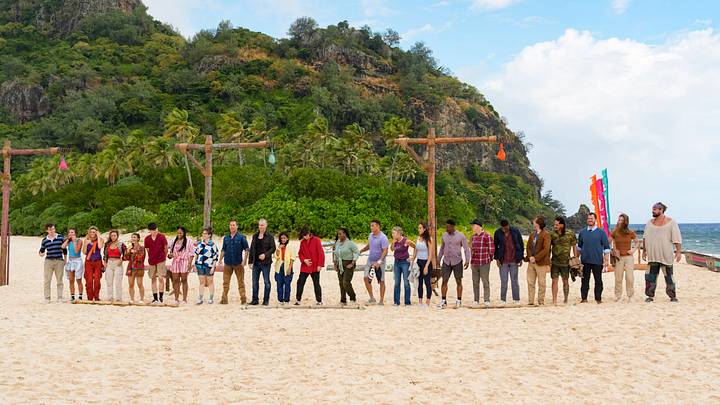
Before Survivor’s premiere in May 2000, creator Mark Burnett pitched a social experiment as a reality competition show: drop a bunch of strangers on a remote island together and force them to build a micro-society that slowly eliminated each other until only two remained. What nobody realized at the time was that this micro-society would consistently mirror American culture season-by-season for over a quarter of a century.
Each season of Survivor feels like its own world, despite the fact that the game rules have roughly stayed the same since the premiere. But the variable in all of this is the castaways, all of whom arrive with different moral codes, biases, anxieties, and communication styles that reflect the place they grew up in and the people they grew up around.
At the end of the day, because of this, Survivor is not just a reality show. It’s a documentary-style cultural archive of Americans’ attitudes towards power, morality, identity, and success. That’s why the show has changed so much over the years and also why we can never go “back to how it used to be.”
The main factors that have always existed, whether subconsciously or not, in the game are players stereotyping each other based on gender, identity, background, sexuality, upbringing, and physical appearance. While we’ve seen less of that in recent years—as the younger generations are much more accepting of people as people and not judging anyone within a game because of who they are by nature—
But even in Survivor 42, we saw Maryanne Oketch and Drea Wheeler exposing the reality of subconscious bias against Black contestants while reacting to a Black man and woman being the first two members of the jury. Castaways today are much more open to expressing these concerns with patterns they’re seeing in the season—or the series—when it comes to identity.
If you look back to the older seasons, however, we see men attempting to emasculate each other by accusing them of being gay which then causes gay contestants in the next couple of seasons to be terrified of sharing any sliver of their identity out of fear of being targeted. And the production itself played a part in that.
We saw multiple seasons of men vs. women which promoted sexist behavior. Tribes divided by age and gender in Survivor: Panama, putting a biological disadvantage on the older tribes and the female tribes chance of winning immunity. And then Survivor: Cook Islands is still regularly regarded as both one of the best, yet one of the most controversial seasons with starting tribes being divided by players’ race.
And watching all those back now, it’s truly awful to see how players are acting towards each other. But if you were old enough to be making memories during those years, you know that that’s exactly what was happening in the real world, too.
But, like I said, as you watch each subsequent season, you also see the growth in people. If the Tribal Council where Jeff Varner outed Zeke Smith happened within the first ten seasons and not in season 34, it would have had an extremely different outcome where Zeke likely would have gone home. But instead, we saw players step out of a game and berate Varner as a terrible person for involving a part of Zeke’s identity that never impacted how he was viewed in the game previously.
The show evolves as society does and it’s one of the most fascinating aspects of Survivor to be a part of. From beginning to end, we get to see how society has changed for the better of humankind through the lens of a social experiment reality show.
 Add us as a preferred source on Google
Loading recommendations... Please wait while we load personalized content recommendations