

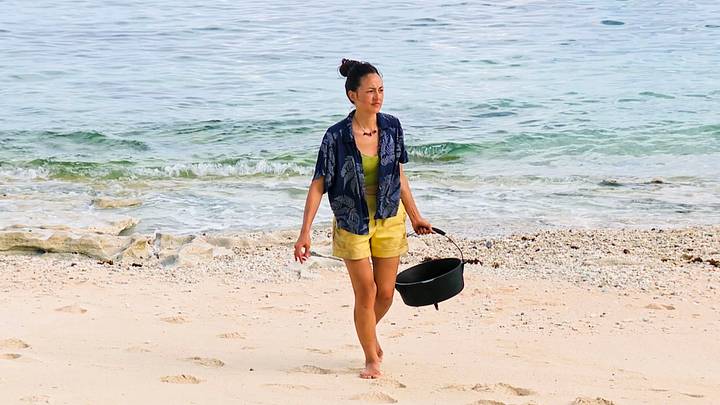
ThoughSurvivorhas always been a social experiment with elements of survival, fans can’t help but notice that the more modern seasons feel like they don’t include any survival elements at all. We’re seeing less day-to-day camp life, no real “providers” are drawn out as characters anymore, and the most fishing we’ve seen in the entire new era took place during a 30-minuteZac Brown appearanceinSurvivor 50.
So yes, it’s true.Survivorhas largely abandoned any trace of the original brutality we saw castaways face in the early seasons of the series. But, there’s a reason for that, and it’s all beneficial to us, the viewers at home.

Survivorhas transitioned into such a strategically demanding game that the editors don’t have time to show us the traditional “survival” elements.
When the show first premiered, survival was a central character. We saw players in confessionals discussing dehydration, no food, weight loss, the toll of manual labor at camp on top of physical exertion during challenges. It was a time where workhorses were valued and slackers at camp were voted off without a second thought.
But in a game that evolved as quickly asSurvivorhas over the years, it’s completely understandable how the “man vs. nature” narrative became less and less important to the storytelling of a season. As a dedicated viewer at home, you know every season our players arrive at camp where they have to build a shelter and start a fire. Early on, those moments were important to the season’s plot because the castaways truly didn’t know what to expect as far as environment and survival went in a season.
Now, however—and really starting around the 10thanniversary season—players know exactly what they’re signing up for. They know they’re not going to get food, possibly won’t even have fire, but they are there to play a game, not prove they can survive on an island. If they wanted to do that, they’d be on a different reality show.
So while we still occasionally see players breaking down due to the survival portion of the show, it usually happens later or is rarer because the castaways getting a chance to play their favorite game aren’t going to complain about the environment they get to play it in. Survival is no longer an integral part of theSurvivorseason narrative.

We’re instead getting to witness more social politics, strategic planning, deception plotting—the parts that, in early seasons, when we got them, weresoexciting. But somewhere along the way, the strategy became expected and fans reverted back to wanting a simpler game where people didn’t play as hard and only cared about the survival elements.
Let me tell you, if you watch back any season betweenBorneoandHeroes vs. Villains, you will be wanting to fast forward through the camp drama where people complain about someone not contributing or people praise the “provider” role and put them on a pedestal. Why? Because after experiencing the fast-paced 26-day games with 90-minute episodes, you’ll realize that those moments are a little stale.
Of course, when they first happened, they were all incredible to watch. We were bright eyed and ready for the unexpected to happen. Now, the unexpected happens thanks to the players, not thanks to the elements.Survivoris truly a game that has to be viewed in a time capsule. The only way you’ll understand the season is if you understand the real-world social dynamics happening at the time it was filmed.
But the world isevolving, therefore the game and the way it’s shared have to as well. Even the castaways being chosen to play are different from the players we got in the beginning. Because new generations are coming into the light and getting their chance to take onSurvivor. So no, we don’t want to go back to the way it was 26 years ago. The best part ofSurvivoris the fact that it’s ever-changing and you never know what to expect next.
 Add us as a preferred source onGoogle
Loading recommendations... Please wait while we load personalized content recommendations