

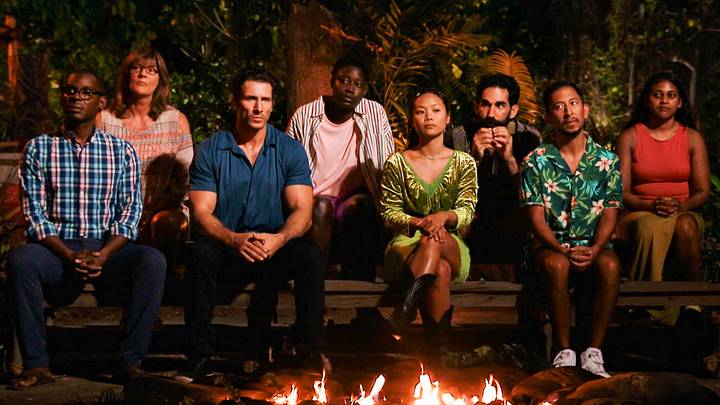
The paradox ofSurvivorhas been the same from Day 1 ofSurvivor: Borneo—eliminate all the other players while still having good enough relationships with them that they want to give you $1 million. It’s harder than it seems.
Because over the last 26 years, we’ve seen many a jury vote in favor of a less active finalist (compared to a dominant, strategic player) simply because they’re angry they aren’t sitting at the end or didn’t have a positive relationship with the power player. Does that meanthe finalistplayed a sloppy social game? Or did the jury just let personal feelings overcome objective gameplay?
While at its heart,Survivoris a social experiment, it’s also a game that requires deception and betrayal. And by the time players are sitting on the jury atFinal Tribal Council, they’ve had enough time pass at Ponderosa that they should be able to separate their own personal interpretation of the game with the facts of gameplay.
Because when we see players like Stephenie LaGrossa Kendrick inSurvivor 50doing no more than praising one finalist and completely ignoring the gameplay of the others sitting at the end, it’s kind of weird to watch…
But at the end of the day,Survivorisn’t an objective game. Because of the human element involved, it’s very subjective when we get to Final Tribal Council and the jury’s personal opinions and feelings are almost always taken into account. So while it’d be great to see less bitter juries over the years, it’s ultimately the finalist’s responsibility to manage the jury, no matter how much or little their emotions tie into their final questions.
Of course, as the viewer, we have a lot more information than the jury does. But that’s what Final Tribal Council is for, right? For the jurors to get all the facts and dissect them how they need to in order to make a $1 million decision. And because the game has no universal rulebook for what makes a “good” player the right person to win, each season’s jury gets to create their own rubric where their subjective feelings may or may not play a huge part.
But true dominance isn’t just being able to pull off major blindsides. It’s voting them out in a way that preserves their respect and allows them to see you as a distinguished adversary and not an opponent they’re still fighting after their torch gets snuffed.
So while players like Russell Hantz made huge moves, found historic numbers of idols, andmade it to the endin back-to-back seasons, he failed both times because of the added cruelty to his resume. Every time someone he wanted went home, the rest of the players saw how negatively he acted towards them while praising himself. So when all those people also inevitably ended up on the jury, their personal feelings highly affected their final vote.

Even Parvati Shallow found herself on the other side of a bitter jury inSurvivor: Heroes vs. Villainsjust because of her association with Russell. Players need to take others' perception of themselves in the game seriously in order to feel confident about claiming a win at the end.
Of course, in the new school era (seasons 21-40), the juries were populated with superfans who viewed backstabbing as “good TV” or “valid resume builders” rather than personal attacks. And in the new era (seasons 41-50), culture has shifted towardsemotional transparencywithin the game to lower the levels of hostility at Final Tribal Council.
So, yes, jurors may occasionally be spiteful, but navigating that is part of the game—the hardest part of the game. And a finalist who ignores the emotions and personal feelings of the jury can usually kiss $1 million goodbye. Because you don’t get to choose the jury you want, but you have to win with the jury you created. So the responsibility will always land on the person asking for a vote for Sole Survivor.
 Add us as a preferred source onGoogle
Loading recommendations... Please wait while we load personalized content recommendations